Complaints Procedure for Business Waste Removal Enfield
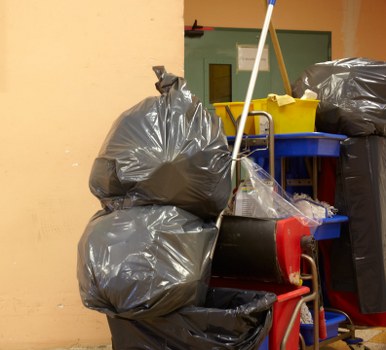 Purpose: This document sets out the formal complaints procedure for clients receiving business waste removal in Enfield and surrounding service areas. It explains how concerns about commercial waste removal services, including missed collections, unsafe practices, billing disputes and alleged environmental breaches, are recorded, investigated and resolved. The aim is to provide a clear, fair and timely process so that issues are handled consistently and lessons are integrated into ongoing operational improvements.
Scope: This policy applies to all commercial clients and premises that use our commercial waste removal Enfield services, including scheduled rubbish collection and ad-hoc clearance works. Complaints may relate to service delivery, personnel conduct, documentation such as waste transfer notes, or perceived non-compliance with contractual terms. It does not replace rights or duties established in the client's service agreement, but it describes the standard company procedure for managing disputes and service concerns.
 How to raise a concern: Clients should raise issues promptly through the designated channels described in their contract or service terms. When submitting a complaint please include:
- Date and time of the incident or collection
- Location and reference to the service type (for example: business rubbish collection Enfield)
- Details of the concern and any supporting evidence (photos, transfer notes)
Acknowledgement and initial response
Upon receipt the complaint will be logged in the complaints register and an acknowledgement will be issued within a reasonable timeframe, typically within three to five working days. The acknowledgement confirms the complaint reference, the person responsible for handling the matter and the anticipated timeline for responses. For routine operational issues this timeframe allows for verification with collection crews and site checks; for more complex complaints the initial acknowledgement will set expectations for further updates.
 Investigation process: The investigation will be undertaken by an assigned officer who will review records, interview staff, examine relevant waste transfer documentation and, where appropriate, visit the location. The process commonly includes liaison with drivers, depot supervisors and contractual account managers to determine root cause. For complaints concerning environmental or safety matters, or allegations of improper disposal, the investigation will prioritize evidence preservation and may involve sampling or photographic records to support findings.
Remedies and outcomes: Possible outcomes include: a written explanation, a corrective action plan, repeat collection at no extra charge, credits against future invoices or staff retraining. Where fault is established, the company will set out the remedial steps and timescales and confirm when the corrective action has been completed. Strong emphasis is placed on preventing recurrence through operational changes, improved scheduling or process updates.
Escalation and independent review
 Escalation: If a complainant considers the response unsatisfactory they may request escalation to a senior manager for further review. The escalation should reference the original complaint number and identify the grounds for review. The senior review will reassess the investigation, any evidence relied upon and the proposed remedy to determine whether the original decision stands or further action is appropriate.
Where disputes remain unresolved after internal escalation, parties are informed of the option to seek an independent or external review where applicable under the terms of their contract. This may involve referral to an industry ombudsman or arbitration process stipulated in the contractual documentation. The company will cooperate with independent reviews and provide requested records, maintaining confidentiality where legally required.
 Record keeping, confidentiality and improvement: All complaints and associated records are retained in accordance with the company’s records policy. Confidential personal data is handled in line with data protection requirements. Aggregate complaint data is analysed periodically to identify trends in service failures, inform staff training, improve routes and scheduling, and enhance safety and environmental compliance. Continuous improvement is a material part of the response: every substantiated complaint leads to a review of procedures so that lessons learned translate into better service for customers relying on commercial waste disposal Enfield services.
Performance monitoring and timescales: The organisation monitors complaint volumes, response times and resolution rates to ensure targets are met. Typical response milestones include acknowledgement within three to five working days, an interim update within ten working days where more time is needed, and a substantive response or resolution proposal within 20 working days for most issues. Complex investigations, for instance those involving environmental compliance checks or multi-site incidents, may take longer and the complainant will be informed of extended timelines.
Roles and responsibilities: All employees are expected to cooperate with complaint investigations. Site staff are responsible for accurate documentation of collections and incidents; depot managers support evidence retrieval; and the complaints team coordinates responses and records remedial actions. Senior management reviews aggregated complaint data to prioritise investment in training, fleet maintenance and operational resilience.
Final note: This complaints procedure applies to all commercial clients of rubbish removal and waste management services in the service region. It is designed to be transparent, equitable and oriented toward prompt corrective action. Clients are encouraged to refer to their service agreement for specific contractual escalation rights and to submit complaints through the formal channels set out in their contract to ensure a timely, documented response.
