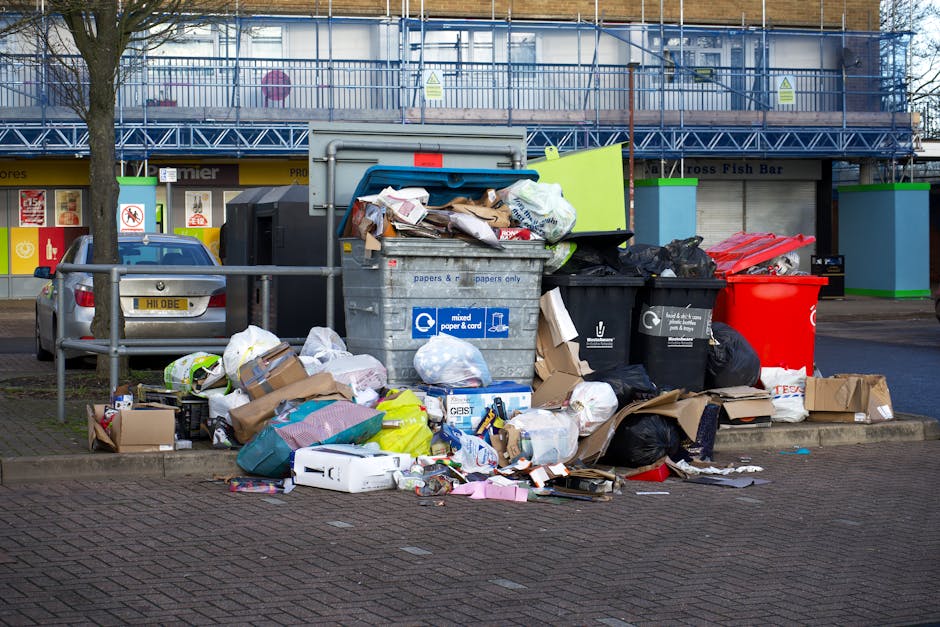
Avoid hidden charges for rubbish removal Enfield Council rules
If you have ever booked rubbish removal and then watched the final bill creep up, you will know how frustrating hidden charges can be. One minute you are comparing prices; the next, you are paying extra for lifting, access, mixed waste, or a job that suddenly turned "more complicated than expected". This guide on Avoid hidden charges for rubbish removal Enfield Council rules explains how to spot the fine print, what to ask before booking, and how to stay on the right side of local waste expectations in Enfield without the drama.
Truth be told, most surprise costs are avoidable. You just need a bit of structure, a few smart questions, and a realistic idea of what the job includes. That is what this article is for: practical, plain-English advice you can use before you hand over a single bag.
Contents
- Why it matters
- How it works
- Key benefits and practical advantages
- Who this is for and when it makes sense
- Step-by-step guidance
- Expert tips for better results
- Common mistakes to avoid
- Tools, resources and recommendations
- Law, compliance, standards, or best practice
- Options, methods, or comparison table
- Case study or real-world example
- Practical checklist
- Conclusion
- Frequently asked questions
Why Avoid hidden charges for rubbish removal Enfield Council rules Matters
Rubbish removal sounds simple. In practice, it can get messy fast. A quoted price often looks good because it is based on assumptions: easy access, ordinary household waste, normal loading time, no awkward stairs, and no specialist items. If your property is a top-floor flat, a narrow terraced house, or a site with parking restrictions, those assumptions can go out of the window very quickly.
That is why this topic matters. Hidden charges do more than sting your wallet. They make it harder to compare providers, they create awkward disputes on collection day, and they can leave you unsure whether the waste is being handled properly. If you are clearing a garage, a loft, a business unit, or a renovation pile, clarity from the start saves time and a lot of irritation.
There is also the local angle. In Enfield, residents and businesses generally want waste removed responsibly and in line with council expectations around lawful disposal, recycling, and public safety. You do not need to memorise every policy detail, but you do need to know the basics: waste should be collected by a legitimate carrier, load descriptions should be accurate, and any special items must be declared upfront.
Key point: the cheapest headline quote is not always the cheapest job. The real cost is the final amount you pay after all extras have been added. That is the number to judge.
How Avoid hidden charges for rubbish removal Enfield Council rules Works
The easiest way to understand rubbish removal pricing is to think in layers. The first layer is the base price. That usually covers a standard volume or type of waste. The next layer is any additional charge triggered by conditions on site or by the waste itself. Then there may be disposal-specific extras for heavy, hazardous, or restricted items. Simple enough on paper. Less simple in real life, especially when a van is half-full of plasterboard and there is a broken fridge tucked behind it.
Most problems start when the provider gives a quote without enough detail. A fair quote should be based on:
- the estimated amount of waste
- what the waste contains
- access to the property
- parking and loading conditions
- the time needed to load everything safely
- whether any items need special handling or disposal
For example, a few bags of garden waste from a ground-floor house will usually be straightforward. A mixed load from a third-floor flat with no lift, a tight stairwell, and no parking nearby is a different matter entirely. If you do not mention those details, you may get a cheerful quote first and a painful revision later. Not ideal.
This is also where choosing the right service type matters. A general waste collection may suit mixed household rubbish, while a more specific service might be better for furniture, appliances, builders' debris, or office items. If the job involves bulky sofas, broken white goods, confidential papers, or renovation materials, be honest about it. The clearer the description, the lower the chance of a surprise on the day.
One small but useful habit: ask the company to confirm what happens if the load is larger than expected. A reputable provider will explain whether the price changes by volume, weight, item type, or access conditions. That conversation takes two minutes. It can save you a lot more than two minutes of grief.
Key Benefits and Practical Advantages
Once you know how hidden charges appear, it becomes much easier to avoid them. The benefits are not just financial, either.
- Better budgeting: you can compare providers on a like-for-like basis rather than chasing the lowest headline number.
- Less stress on collection day: no awkward "that will be extra" moment at the kerb.
- Faster clearance: if the job is described properly, crews can arrive prepared and get on with it.
- Lower dispute risk: clear expectations mean fewer arguments over access, weight, or item type.
- Improved compliance: good providers are more likely to handle waste responsibly and explain any restricted items clearly.
There is another benefit people often overlook: confidence. When you know the price structure, you can decide whether to remove items yourself, split the job into smaller loads, or book a more suitable clearance service. That control is worth something, especially if you are dealing with a full house, a cluttered office, or a post-renovation mess that seems to have multiplied overnight.
If you are also thinking about recycling, the right provider can often separate materials sensibly. That can reduce waste going to landfill and keep the job cleaner overall. For a deeper look at how responsible disposal is handled, see recycling and sustainability.
Who This Is For and When It Makes Sense
This advice is useful for almost anyone booking waste clearance in or around Enfield, but it is especially relevant if any of the following apply:
- you are moving home and need quick clearance without expensive surprises
- you are clearing a loft, garage, or shed with mixed junk and bulky items
- you are a landlord or letting agent dealing with tenant left-behind waste
- you run a small business and need office or stockroom items removed
- you are managing builders' debris after a refurbishment
- you have white goods or furniture that might trigger specialist handling fees
It also makes sense if you have a tight budget. Let's face it, nobody wants a "budget" that is really a rough estimate with half the detail missing. If cost certainty matters, you need an itemised, honest quote and a clear explanation of what is included.
Some people only start thinking about hidden charges after they have already booked. That is normal. A Sunday morning clear-out, a pile of broken chairs, a bit of panic, and suddenly you are just trying to get it done. But if you are planning in advance, you are in a far stronger position. A little preparation goes a long way.
Step-by-Step Guidance
If you want to avoid hidden fees, follow a proper process rather than jumping straight to the cheapest option.
- List everything you want removed. Write down the items, not just "a bit of rubbish". Include furniture, appliances, rubble, bags, garden waste, and anything awkward.
- Separate special items. Fridges, mattresses, sofas, electronics, and hazardous waste can affect pricing and disposal methods. If something might need extra care, flag it early.
- Check access conditions. Mention stairs, narrow hallways, limited parking, loading distance, security gates, or time restrictions. These details matter more than people think.
- Ask what the quote includes. Confirm whether labour, loading, disposal, congestion-related delays, and recycling fees are covered.
- Ask what is not included. This is the line that saves people. A proper provider should be able to tell you the exclusions clearly.
- Get clarity on item changes. If you add more waste on the day, how is that charged? By bag, by cubic volume, by weight, or by a revised flat rate?
- Request written confirmation. Even a short email summary is better than relying on memory. The day gets noisy. People forget things. It happens.
- Prepare the waste in advance. Stack it neatly, keep pathways clear, and separate reusable items if needed.
- Be present, if possible. Being there at collection helps resolve questions quickly and avoids guesswork.
A small real-world example: if you are clearing a flat and the provider thinks it is one room's worth of waste, but you actually have a sofa, a broken wardrobe, fifteen bags, and a fridge in the kitchen, the quote will almost certainly change. Not because anyone is being awkward. Because the load is different. Accuracy up front is everything.
Expert Tips for Better Results
Here are the habits that make the biggest difference, based on what usually causes trouble.
- Use photos when asking for a quote. A few clear pictures can prevent a lot of back-and-forth. Good photos beat vague descriptions every time.
- Measure bulky items. If a wardrobe will not fit through the hallway without dismantling, mention it.
- Be honest about mixed waste. Mixed loads can cost more than pure loads because sorting takes time and disposal routes differ.
- Ask about minimum charges. Sometimes a job that looks small still attracts a minimum fee. Better to know before booking.
- Check the provider's payment terms. If you are not sure what payment methods are accepted or when payment is due, read the service terms early and review payment and security.
- Watch for "subject to inspection" wording. That is not automatically bad, but it should come with a sensible explanation of what might change and why.
One more thing: if the waste includes confidential papers, call it out. If it includes a damaged fridge or freezer, mention that too. Hidden charges often come from things that were never hidden in the first place; they were just not discussed properly. A bit annoying, yes, but very fixable.
If you want a provider that is upfront about what happens during collection and after payment, it can help to read about the company's approach in their about us information. That does not replace a quote, but it does tell you a lot about tone and transparency.
Common Mistakes to Avoid
Most billing problems come from a small number of predictable mistakes. Here are the big ones.
- Only giving a rough description. "Just a bit of clutter" is not enough. The provider cannot price a mystery.
- Forgetting access issues. Top floor, no lift, narrow stairs, parking restrictions, rear access only - these can all affect the job.
- Assuming all waste is treated the same. Builders' waste, green waste, furniture, and electricals may need different handling.
- Not asking about extra labour. If dismantling, carrying long distances, or waiting for keys is needed, it may change the price.
- Skipping the terms. Dry reading, maybe. Useful? Absolutely.
- Booking in a rush. Last-minute jobs are often fine, but they leave less room to compare offers and spot hidden extras.
It is easy to make these mistakes when you are busy. We have all done the "I'll sort it later" thing and then regretted it at 7:30pm while standing in a hallway full of dismantled furniture. That is exactly why a simple checklist helps.
Tools, Resources and Recommendations
You do not need complicated tools to avoid surprise charges. You need good information, organised in a sensible way.
- Phone camera: take clear photos of the waste from a few angles.
- Note app or paper list: write down all items, especially anything heavy or unusual.
- Measuring tape: helpful for sofas, beds, wardrobes, and clearance spaces.
- Building access notes: note door width, stair count, parking distance, and any restrictions.
- Booking confirmation: keep the quote and the agreed scope together.
For larger or more mixed loads, it can be useful to compare related services before booking. For example, builders' debris, domestic furniture, and office items are often handled differently. You can look at builders waste clearance, office clearance, or furniture disposal if your load is quite specific.
If you are unsure what can safely be loaded with other waste, the guide on what can go in a skip can also help you understand common restrictions and avoid accidental extras. Different services are not identical, and that is where people sometimes get caught out.
Law, Compliance, Standards, or Best Practice
In the UK, waste should be handled by a legitimate, compliant route. That means using a provider that can lawfully collect and dispose of waste, and being honest about what is being removed. You do not need to become a waste-law expert, but you should understand the practical basics.
From a best-practice point of view, a reputable rubbish removal provider should be able to explain:
- what type of waste they will take
- what requires special handling
- how pricing is calculated
- how they deal with recycling and disposal
- what happens if the job changes on the day
That transparency matters because it reduces the risk of disputes and helps keep waste moving through proper channels. If you are dealing with sensitive materials, safety concerns, or restricted items, it is sensible to review pages such as hazardous waste disposal and insurance and safety so you understand how the provider frames those issues.
Another practical point: if a company gives you a quote but refuses to clarify exclusions, that is a warning sign. Not necessarily a disaster, but definitely a reason to pause. Clear paperwork and straightforward answers are part of good service, full stop.
Options, Methods, or Comparison Table
Different rubbish removal approaches suit different situations. Here is a simple comparison to help you choose without overthinking it.
| Option | Best for | Possible drawback | Hidden charge risk |
|---|---|---|---|
| Fixed-price rubbish removal | Clearly described loads with easy access | Price may rise if details were incomplete | Medium if scope is vague |
| Volume-based clearance | Mixed household or bulky waste | Can be confusing if load size is estimated badly | Medium to high if photos are poor |
| Item-based removal | Single appliances, sofas, fridges, or mattresses | Extra items may be charged separately | Low if you list items accurately |
| Skip hire | Longer projects or DIY jobs | Permit, placement, or loading restrictions may apply | Low to medium depending on waste type and location |
If you are comparing clearance methods, think about the shape of the job, not just the price. A small job with awkward access can be more expensive than it first looks. A bigger, neat, well-described job can sometimes be simpler and more cost-efficient than a supposedly "cheap" option that keeps adding extras.
Case Study or Real-World Example
A typical example: a couple in Enfield were clearing a loft before selling their home. The initial description was "old boxes, some junk, maybe a chair or two". Once they checked properly, it turned out there were six bin bags, two wardrobes, an old mattress, a broken desk, and a few small electrical items. There was also a narrow staircase, and the loft hatch was a bit awkward.
Instead of waiting for the bill to explode on the day, they sent photos and updated the description before booking. The quote changed, but only slightly, because the provider knew exactly what to expect. No surprise labour charge. No awkward renegotiation. Just a long afternoon, some dust in the hallway, and a much lighter loft by tea time.
That is the point, really. Hidden charges tend to show up where communication is weak. When the waste is clear, the access is clear, and the rules are clear, the job usually goes far more smoothly. Simple, but not always easy.
Practical Checklist
Use this before you confirm a rubbish removal booking:
- Have I listed every item that needs removing?
- Have I separated bulky, heavy, or special items?
- Have I mentioned stairs, parking, access, and loading distance?
- Have I asked what the quote includes?
- Have I asked what would trigger an extra charge?
- Have I confirmed payment terms in writing?
- Have I checked whether recycling or disposal fees are included?
- Have I understood the policy for additional waste on the day?
- Have I looked at relevant service pages if the load is specialised?
- Have I kept the quote or booking confirmation somewhere easy to find?
If you can tick all of those off, you are in a much stronger position. And if one or two answers are still fuzzy, ask again. Better to ask twice than pay twice.
Conclusion
Hidden charges are rarely mysterious. They usually come from vague descriptions, unclear access details, or assumptions nobody bothered to test. Once you understand that, you can take control. In Enfield, the smartest approach is straightforward: be specific, ask for inclusions and exclusions, keep your booking details in writing, and choose a provider that explains pricing clearly.
That way, rubbish removal becomes what it should have been all along - a practical job, not a guessing game. A bit of care at the start saves money, time, and that sinking feeling when the final invoice lands on the doormat.
Get a free quote today and see how much you can save.
If you are still comparing options, you can also review the company's pricing and quotes page, or get in touch through the site's contact page if you want to clarify the details before you book. A quick conversation now can save a lot of back-and-forth later.
Frequently Asked Questions
What are hidden charges in rubbish removal?
Hidden charges are extra fees that were not clearly explained before the job started. They often relate to access, labour, extra volume, specialist items, or waste that needs special disposal.
How do I avoid surprise fees when booking rubbish removal in Enfield?
Give a full description of the waste, share photos, mention access issues, and ask exactly what is included in the quote. Written confirmation helps too.
Are council rules the same as private rubbish removal rules?
Not exactly. Council expectations usually focus on lawful disposal, public safety, and responsible waste handling, while private providers also set their own pricing and booking terms.
Why does my rubbish removal quote change after inspection?
Because the actual load, access, or labour requirements may differ from the original description. If the job turns out larger or harder to move, the price can change accordingly.
Do I need to mention fridges, mattresses, or sofas separately?
Yes, absolutely. These items can involve different handling or disposal requirements, so they should be declared in advance to avoid extra charges later.
Is a fixed price always better than a volume-based quote?
Not always. A fixed price is useful when the job is clearly defined, while a volume-based quote may be more suitable for mixed or uncertain loads. The key is clarity.
Can I reduce costs by sorting waste before collection?
Usually, yes. Separating reusable items, keeping waste tidy, and removing anything you can dispose of separately can make the job simpler and sometimes cheaper.
What should be included in a proper quote?
A proper quote should explain the load type, likely volume or item list, access assumptions, labour, disposal expectations, and any likely extras or exclusions.
What happens if I add more rubbish on the day?
That depends on the provider's terms. Some charge by extra volume or item, while others may need to revise the quote before continuing.
How can I tell if a rubbish removal company is transparent?
Transparent providers answer questions clearly, explain exclusions, give practical pricing details, and are not evasive about what might affect the final bill.
Should I ask about recycling and disposal before booking?
Yes. It is sensible to ask how the waste will be handled, especially if you want a more responsible disposal route or have mixed waste that may need sorting.
Where can I find more information about related clearance services?
You can explore related pages such as house clearance, garage clearance, and garden clearance if your job is more specific than a general rubbish collection.